

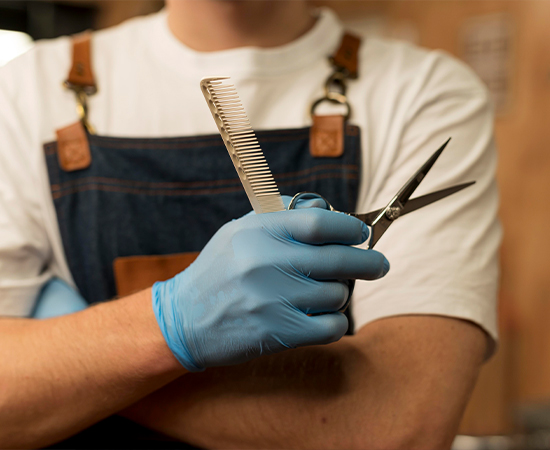
A shaveless hair transplant can be performed if there is partial hair loss only at the frontal hairline, considered the starting point of hair, and the crown area. Usually, thinning occurs in these areas as well. The procedure works on the thinning hair parts without touching the areas to be transplanted. In shaveless hair transplants, the nape area is partially shaved. Here, the procedure is applied in two different categories
Shaveless Hair Transplant According to the American Shaving Method
For this method, the person wanting a hair transplant must have thinning only in certain areas of their hair, not all over. Mostly, the nape area is shaved to a grade 1-2. The hairs from the shaved areas are carefully taken and the transplantation procedure is applied to the thinning follicles.
The nape area heals quickly. Since the thinning area is not touched, a return to daily life occurs in a short time. If the thinning area is large, the area to be shaved will also be large.
Shaveless Hair Transplant with Window-Shaped Shaving Application
For this method to be applied, the person's hair at the nape must be long. If the hair is not long, it must be waited to grow. The hair at the nape is lifted and a shaving procedure is applied only in a certain area. Since the long hair will cover the shaved area, it will not be noticeable that it has been shaved. This is the most ideal hair transplant procedure for those experiencing partial hair loss.
What Points Should Be Considered During Shaveless Hair Transplant Procedures?
For the type of procedure performed to reduce aesthetic concerns in hair transplants, procedures are carried out under the conditions specified above. If the person has hair on their nape or a specific area, a shaveless hair transplant can be performed. Otherwise, this hair transplant procedure cannot be applied. You can contact a hair transplant specialist to find out if a shaveless hair transplant is suitable for you
In addition, since hair cutting is not performed with this method, the other hair will eventually become oily. Oily hair increases the risk of infection, so it must be used carefully. You need to care for both your existing hair and your newly forming hair separately. You can complete the hair transplant by maintaining good and hygienic cleanliness. You can get more detailed information about shaveless hair transplants by visiting our institution